 WhatsApp
Sadly, there are no guaranteed ways to fully prevent colorectal cancer or any cancer for that matter. This is due to the many risk factors that contribute to causing cancer. Luckily, there are ways that you can lower your risk.
Colorectal Cancer Screening
This is your best bet of preventing colorectal cancer and reducing your risk.
Screening is a process in which doctors use specific tests to detect pre-cancerous lesions (e.g. polyps) and treat these to prevent the actual cancer from forming. For screening to be effective, the disease (i.e. colorectal cancer) has to be common (it is the MOST common cancer in Singapore) and ideally should be performed on those who do not yet have any symptoms of the disease.
For colorectal cancer, the best screening test is the Colonoscopy.
Colorectal cancer starts as small non-cancerous growths on the inner lining of the colon or rectum. These are called polyps. They seldom cause symptoms due to their small size and usually take months to years to ever become a cancer. Regular screening is therefore your best chance of detecting these ‘silent’ polyps before they transform into cancer. Removing them early will therefore prevent cancers from forming in the first place.
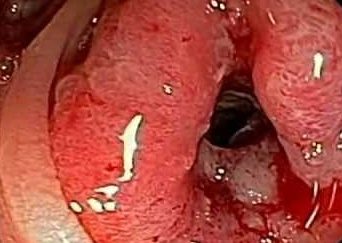
Colorectal cancer as seen during Colonoscopy
One should come for a colonoscopy by the age of 45 years old OR 10 years before the youngest cancer in the family, whichever is earlier. If you already have symptoms like pain, bleeding, change in bowel habits (i.e. irregular patterns, flipping between constipation and diarrhoea) or weight loss, you should come to speak to our doctor early and have a discussion about doing a colonoscopy.
Factors that you cannot change or modify
You cannot change your family tree and these have genetic risks that are passed down from one generation to another.
1. Age
All those aged 45 years old and above are at increased risk of having colorectal cancer.
2. Family history of Colorectal Cancer or Polyps
Those with a family history will have a higher risk of developing colorectal cancer themselves. The more family members and the closer they are to you (eg. immediate siblings or parents), the higher the risk you have of getting this cancer.
3. Personal History of Inflammatory Bowel Disease (IBD)
Long-standing IBD (e.g. ulcerative colitis) increases the risk of developing colorectal cancer.
4. Inherited Syndromes or Gene-related Risk
Although only a small percentage, gene-related issues in the family can also increase the risk of colon cancer greatly. Usually such individuals can develop cancer at a much younger age, even in their 20s or 30s.
Factors you can modify to reduce your risk
There are things you can do to reduce your risk of colorectal cancer. These relate to your lifestyle choices.
These are 5 factors that you should pay attention to:
1. Smoking and Alcohol Consumption
Smoking and excessive alcohol intake are bad for your health. It also increases your risk of developing colorectal and many other cancers. The best thing to do is quit smoking and drink only occasionally and not in large quantities.
2. Diabetes
People with diabetes are also susceptible to getting cancer, especially those whose diabetes is not well controlled. Diabetics therefore must ensure that their condition is monitored closely and that their medications and diet are optimised.
3. Bodyweight
Being obese or overweight increases your risk of having colorectal cancer, regardless of gender. Know your ideal weight and ensure that you keep to it through a combination of eating a balanced diet and regular exercise.
4. Well-Balanced Diet
People who take a balanced diet comprising a good mix of fibre and meat have a lower chance of developing colorectal cancer. There is no guarantee and even vegetarians can get colorectal cancer, due to factors you cannot change as above. To reduce the overall risk, one should also avoid eating processed foods (e.g. fast foods) or preserved foods, as well as deep-fried or barbecued foods.
5. Regular Physical Activity
Avoid a sedentary lifestyle, i.e. do not be a couch potato! Increasing your physical activity level can lower your risk of having colorectal cancer. You should maintain an active lifestyle with regular exercise of at least 3 times per week lasting at least 30 minutes each time. Remember that exercising regularly is not an excuse to eat anything you want!